Why Overseas Brands Choose Chinese Clothing Manufacturers
For fashion brands entering a new market or expanding an existing collection, choosing the right clothing manufacturer is one of the most important business decisions. Product quality, pricing, minimum order quantity, delivery time and communication can all directly affect a brand’s success.
Over the years, China has developed one of the world’s most complete apparel supply chains. From fabric sourcing and garment development to printing, embroidery, sewing, finishing and international shipping, Chinese clothing manufacturers can provide overseas brands with a highly integrated production solution.
This is why many fashion brands in the United States, Europe, Australia and other international markets continue to work with experienced clothing manufacturers in China.
1. A Complete and Efficient Apparel Supply Chain
One of the main advantages of manufacturing clothing in China is access to a well-established supply chain.
A garment may require many different suppliers and production processes, including:
Fabric and trim sourcing
Pattern making and size grading
Sample development
Printing and embroidery
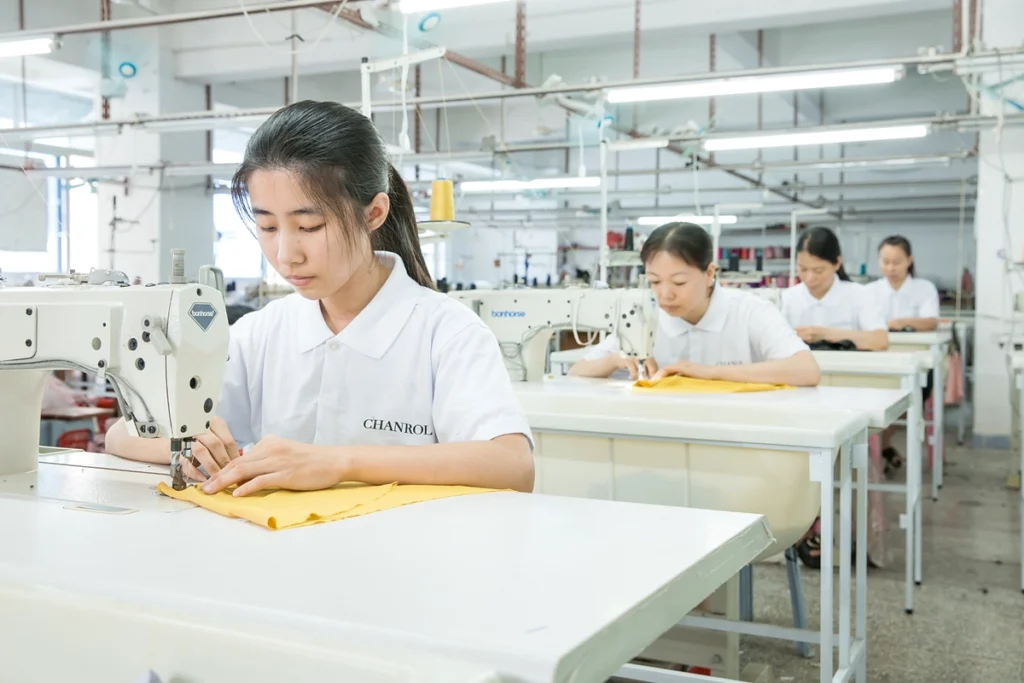
Cutting and sewing
Washing and special finishing
Labels, hangtags and packaging
Quality inspection
International shipping
When these resources are located within the same manufacturing network, production becomes more efficient. Manufacturers can source different fabrics, compare prices, arrange specialized techniques and solve production issues more quickly.
At Guangzhou Chanrol Apparel Co., Ltd., we work with established fabric, trim, printing, embroidery and garment production partners. This allows us to manage different stages of the order while providing customers with one main point of communication.

2. Flexible Custom Clothing Development
Overseas brands often require more than standard blank garments. They may need customized fabric, original patterns, special sizing, branded trims or complicated logo techniques.
Experienced Chinese clothing manufacturers are able to support a wide range of customization requirements, such as:
Custom garment patterns and measurements
Private labels and branded packaging
Custom fabric colors
Screen printing, puff printing and high-density printing
Direct-to-garment printing
Flat embroidery and 3D embroidery
Appliqué, chenille and chain-stitch embroidery
Garment washing and dyeing
Custom zippers, buttons, drawcords and other trims
This flexibility is especially valuable for streetwear brands, fashion labels, corporate merchandise programs and lifestyle brands that want their products to look different from mass-market garments.
Rather than simply adding a logo to an existing product, brands can develop garments based on their own designs, technical packs, reference samples or creative concepts.
3. Competitive Pricing Without Sacrificing Customization
Price remains an important reason why international brands source apparel from China. However, competitive pricing does not only come from lower production costs.
China’s apparel industry benefits from production experience, specialized machinery, large material markets and efficient coordination between suppliers. These advantages can reduce fabric waste, shorten sourcing time and improve overall production efficiency.
The final price of a custom garment usually depends on several factors:
Order quantity
Fabric composition and weight
Garment construction
Printing or embroidery technique
Number of colors
Labels and packaging
Quality requirements
Delivery method
A reliable manufacturer should provide a detailed quotation based on the actual product specifications. Extremely low prices may indicate that the supplier has misunderstood the design, excluded certain costs or planned to use lower-quality materials.
At Chanrol, we review the product details before confirming the final quotation. Our goal is to provide commercially suitable pricing while maintaining the agreed fabric, construction and workmanship standards.
4. Support for Both Growing and Established Brands
Not every brand is ready to order thousands of pieces per style. Many emerging brands need to test a design before committing to a larger production run.
Some Chinese clothing manufacturers now provide more flexible minimum order quantities for custom apparel. This allows growing brands to launch new collections, test customer demand and control inventory risk.
Chanrol mainly produces custom men’s knitwear and women’s fashion apparel. Our general minimum order quantities are:
Men’s knitwear: approximately 200 pieces per color per style
Women’s apparel: approximately 150 pieces per color per style
The exact MOQ may vary depending on the fabric, color, garment construction and customization requirements. Certain custom-developed fabrics, trims or packaging materials may require higher quantities.
For established brands with larger orders, China also offers the production capacity and equipment required to manage volume manufacturing.
5. Wide Range of Fabrics and Garment Techniques
Access to different materials and techniques gives fashion brands greater creative freedom.
Chinese fabric markets and textile suppliers offer a wide selection of materials, including cotton jersey, French terry, fleece, rib, interlock, denim, woven fabrics and functional materials. Manufacturers can also help customers compare fabric weights, compositions, hand feel and performance.
Brands can combine these fabrics with different decorative techniques to develop more distinctive products. A hoodie, for example, may use heavyweight French terry, garment washing, appliqué embroidery and a custom metal zipper. A T-shirt may combine screen printing, puff ink and embroidery in one design.
An experienced manufacturer should evaluate whether the selected fabric and decoration technique are technically compatible. This helps prevent common problems such as color migration, fabric distortion, cracking, shrinkage or poor embroidery performance.
6. Experienced Sample Development
Sampling is an essential stage of custom clothing production. It gives the brand an opportunity to review the fit, fabric, color, workmanship and decoration before bulk production begins.
A professional sample development process may include:
Reviewing the design or technical pack
Confirming fabrics, trims and garment measurements
Creating the pattern
Producing the first sample
Receiving customer comments
Revising the fit or construction
Confirming the pre-production sample
Starting bulk production
Clear sample comments are important. Brands should provide specific feedback using measurements, photographs and marked-up files whenever possible.
At Chanrol, we can develop products from technical packs, reference garments, design images or detailed customer instructions. We also help identify unclear details before sampling so that the development process can be more accurate.
7. Quality Control Throughout Production
Quality control should not only take place after garments are finished. Problems are easier and less expensive to correct when inspections are completed during different production stages.
A structured quality-control process can include:
Fabric inspection
Shrinkage testing
Measurement checking
Printing and embroidery approval
Cutting inspection
In-line sewing inspection
Final measurement checking
Workmanship inspection
Packing and quantity verification
For international orders, the approved sample and size specification should be used as the main production standard.
At Chanrol, we follow the approved product details during production and inspect garments before shipment. Customers may also arrange an independent third-party inspection when required.
8. International Shipping Experience
Producing the garments is only part of the process. Overseas brands also need reliable shipping arrangements and accurate export documentation.
Chinese clothing manufacturers frequently work with international freight forwarders and can support different delivery options, including express courier, air freight, sea freight and DDP shipping services.
The best shipping method depends on the order volume, carton dimensions, required delivery date and destination country. Small or urgent shipments may be sent by express courier or air freight, while larger production orders are generally more cost-effective by sea.
Brands should discuss the shipping plan before production is completed to avoid unexpected freight costs or delivery delays.
9. What Overseas Brands Should Look for in a Chinese Manufacturer
China has thousands of garment suppliers, but their capabilities and service levels vary considerably. Before placing an order, overseas brands should evaluate:
Product specialization
Sample quality
Communication speed and accuracy
Understanding of technical requirements
Factory capacity
Quality-control procedures
MOQ flexibility
Production lead time
Export and shipping experience
Transparency when problems occur
The right manufacturer should not simply say yes to every request. A reliable production partner should identify potential risks, recommend practical solutions and keep the customer informed throughout the order.
Working with Guangzhou Chanrol Apparel Co., Ltd.
Guangzhou Chanrol Apparel Co., Ltd. is a custom clothing manufacturer serving fashion brands and merchandise customers in international markets.
We specialize in:
Custom T-shirts, hoodies, sweatshirts, shorts and sweatpants
Men’s knitwear and streetwear
Women’s dresses, tops, skirts, pants and fashion apparel
Custom printing and embroidery
Private labels, hangtags and packaging
Sample development and bulk production
International shipping support
With experience in apparel development, manufacturing and export coordination, our team works closely with customers from initial sampling through final delivery.
Whether you are developing your first collection or looking for a long-term production partner, choosing the right Chinese clothing manufacturer can give your brand access to flexible customization, specialized workmanship and a complete apparel supply chain.
To discuss your next clothing project, contact Guangzhou Chanrol Apparel Co., Ltd. and send us your design, technical pack, reference sample or product requirements.